SULFUR: THE FOURTH MACRONUTRIENT IN FERTILIZATION
In current fertilization practices, sulfur is classified as a secondary macronutrient, but due to the increasingly widespread deficiency of this element, there are proposals to consider it the fourth macronutrient in plant fertilization, after nitrogen (N), phosphorus (P), and potassium (K).
In current fertilization practices, sulfur is classified as a secondary macronutrient, but due to the increasingly widespread deficiency of this element, there are proposals to consider it the fourth macronutrient in plant fertilization, after nitrogen (N), phosphorus (P), and potassium (K).
Sulfur deficiency in crops is becoming increasingly pronounced, and the application of this element is becoming necessary to improve crop yields.
In plant fertilization, there is a law of the minimum, or Liebig’s Law, which states that crop yield is determined by the nutrient element that is present in the lowest quantity.
International organizations such as IPNI (International Plant Nutrition Institute) are studying the elemental sulfur requirements of our crops in order to take them into account and incorporate them into fertilization programs.
Requirements kg/t of grain or dry matter
Yields (t/ha)
S uptake (kg/ha)
Crop
Requirements (kg/t)
Yield (t/ha)
S uptake (kg/ha)
Alfalfa
2.7
10
27
Rapeseed
10.3
3
31
Sunflower
5.0
3
15
Maize
4.0
10
40
Soybean
7.0
4
28
Sorghum
3.7
10
37
Wheat
4.5
5
23
Source: Adapted from INPOFOS. Informaciones Agronómicas del Cono Sur, No. 4, December 1999.
The importance of sulfur in plant nutrition is determined by the functions performed by this element, both in the soil and in the plant, which include the following:
- Functions of sulfur in the soil: lowering pH, balancing electrical conductivity, increasing microbiota, and unlocking other macro- and micronutrients such as phosphorus.
- Functions of sulfur in the plant: it is necessary for the formation of essential amino acids such as cysteine and methionine; it is part of secondary metabolites involved in the smell and flavor of certain vegetables; it increases chlorophyll levels in leaves; and it also has a fungicidal and acaricidal function.
Related products
Biostimulants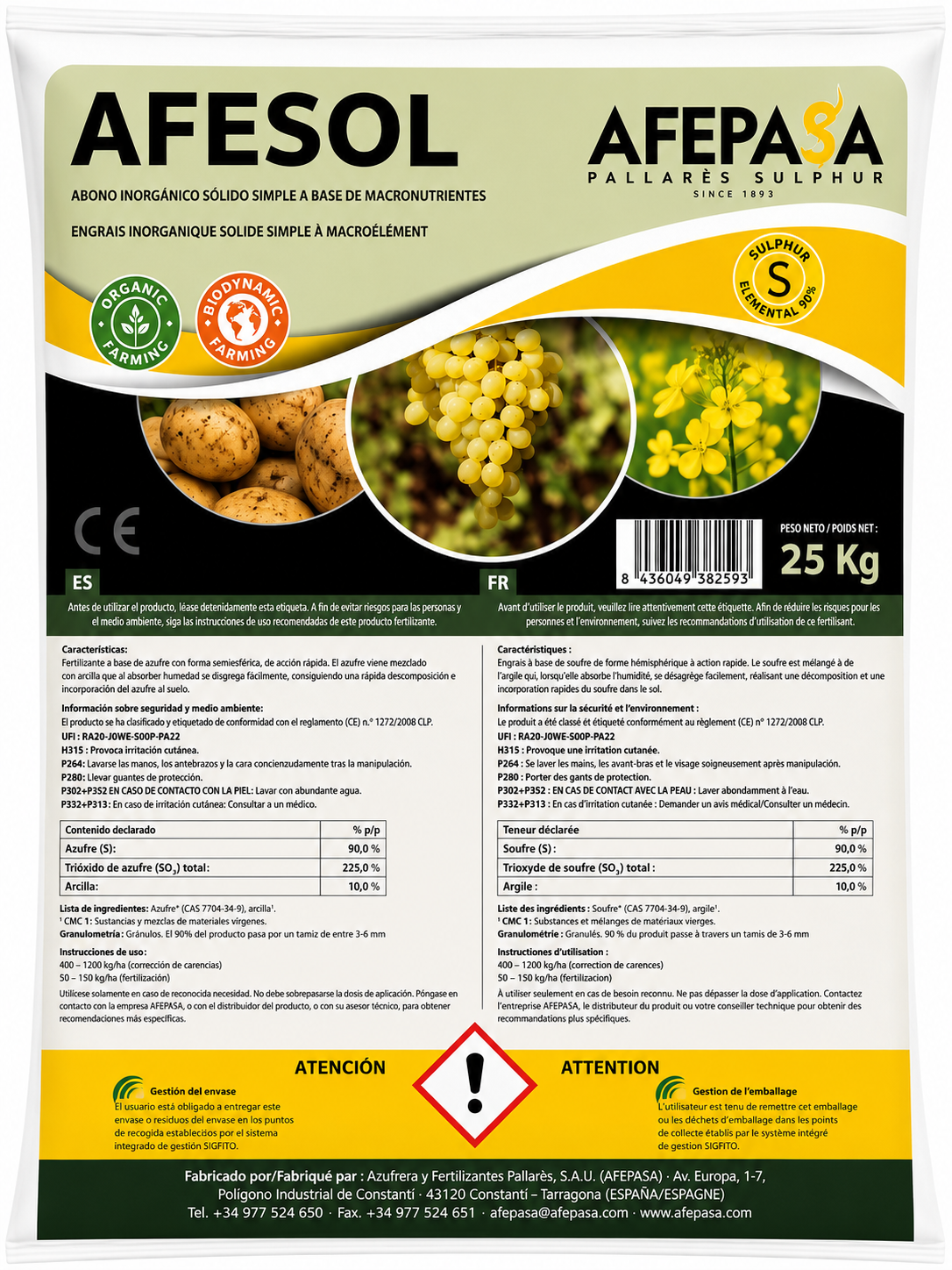 FERTILIZERS
AFESOL
Semi-spherical soil amendment with rapid action. The sulphur is blended with clay, which…
 FERTILIZERS
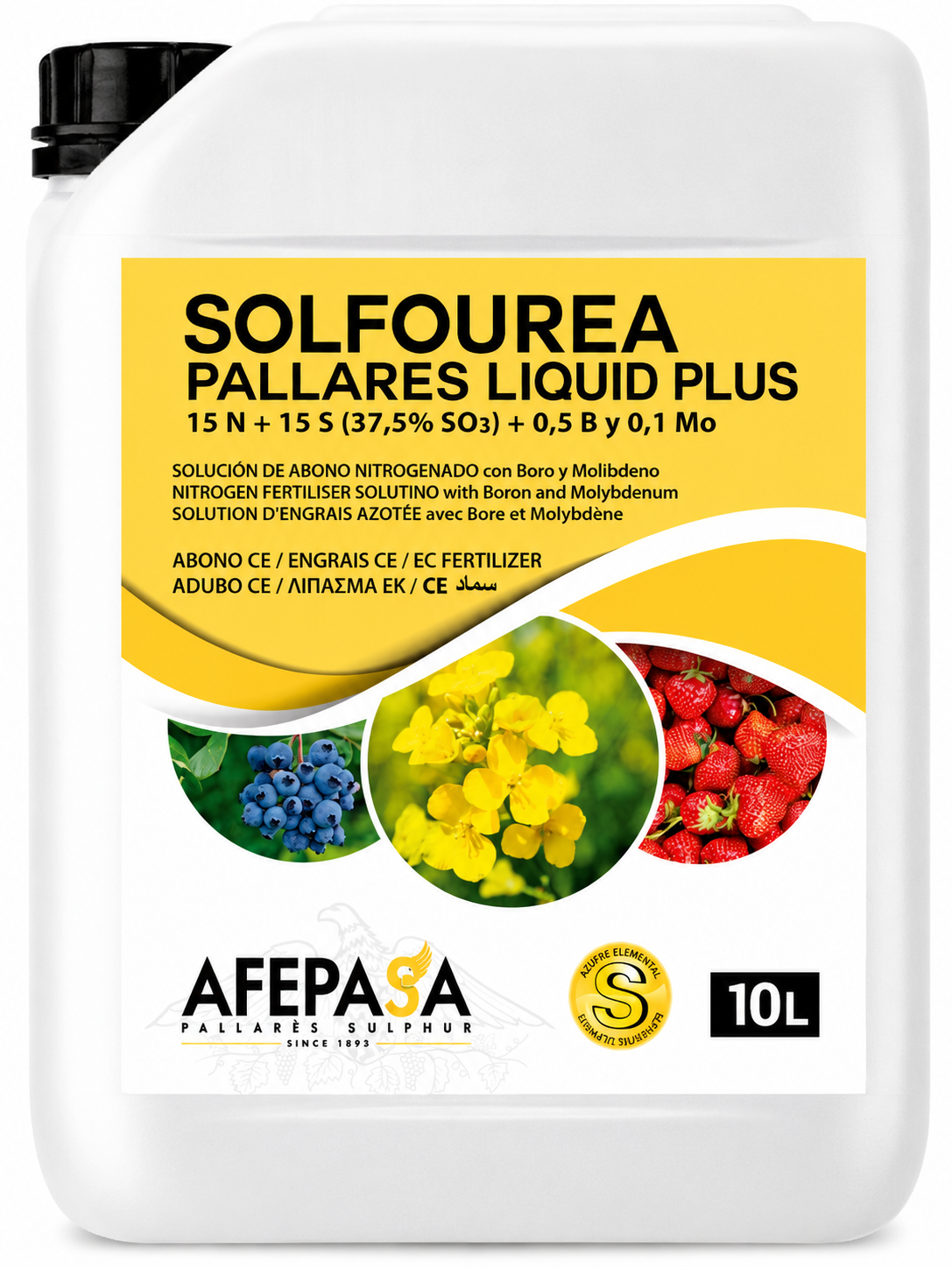
SOLFOUREA PALLARES LIQUID PLUS
Liquid nitrogen fertiliser enriched with sulphur, boron and molybdenum, designed to…
 FERTILIZERS
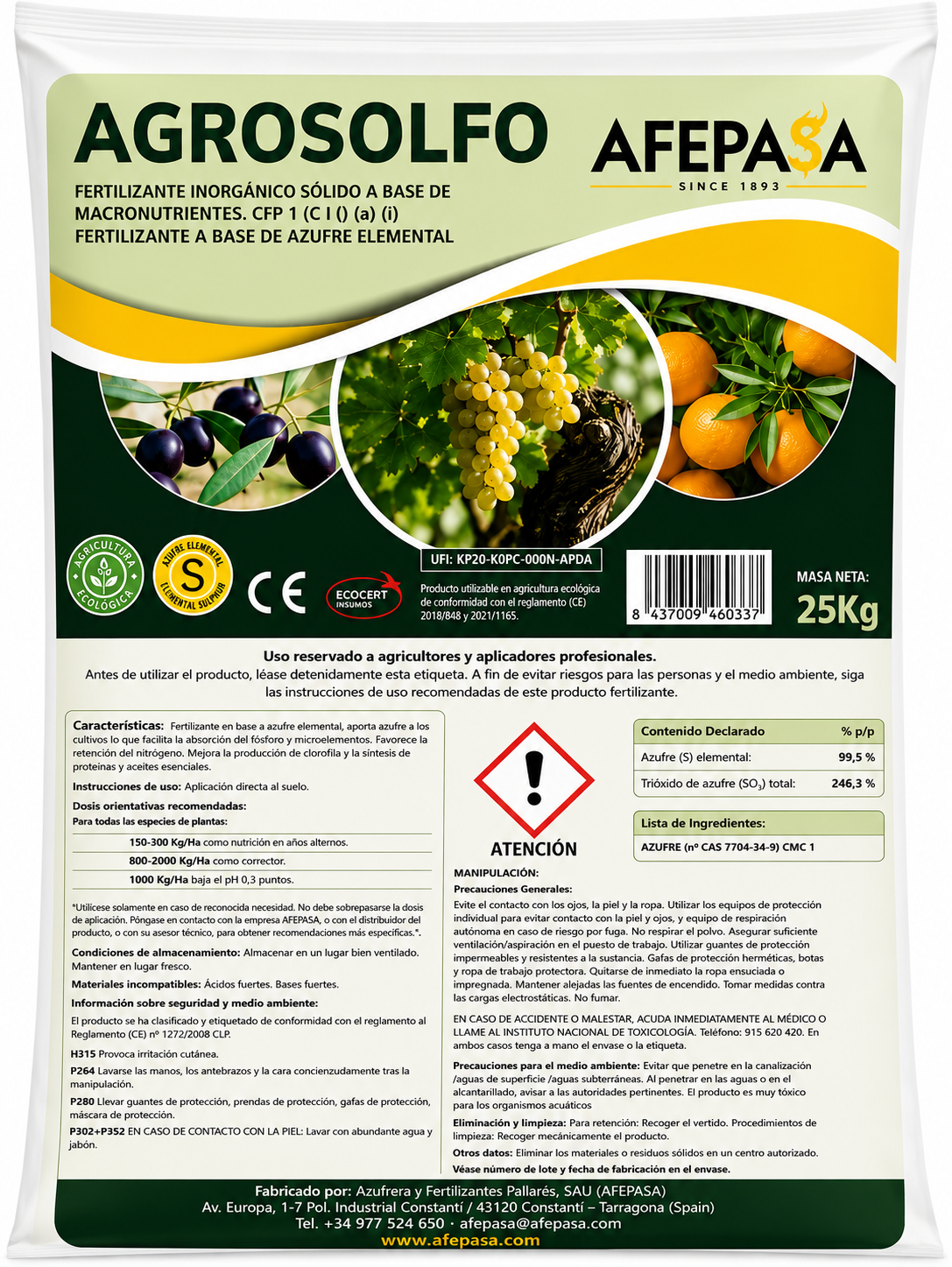
AGROSOLFO
Solid soil amendment designed to improve the physical, chemical and biological properties…