Sulfur as a Fertilizer
AEFA interviews Manel Montaño and highlights the properties of elemental sulfur as a nutrient.
El uso más conocido del azufre es el de fungicida y acaricida y su acción excelente contra el oídio. En una entrevista realizada recientemente con AEFA (Asociación Española de Fabricantes de Agronutrientes), Manel Montaño, director general, señaló las propiedades y la importancia del azufre como macronutriente.
Reproducimos aquí la entrevista, que también podéis leer en su web. (aefa-agronutrientes.org)
Used since ancient Mesopotamia, sulfur has played and continues to play a major role in agriculture, both in crop protection and agronutrition.
We are dealing with the fourth element, and its recognition in the new European regulation will elevate elemental sulfur to the category of macronutrient, a well-deserved recognition of its benefits and of crops’ needs for this nutrient.
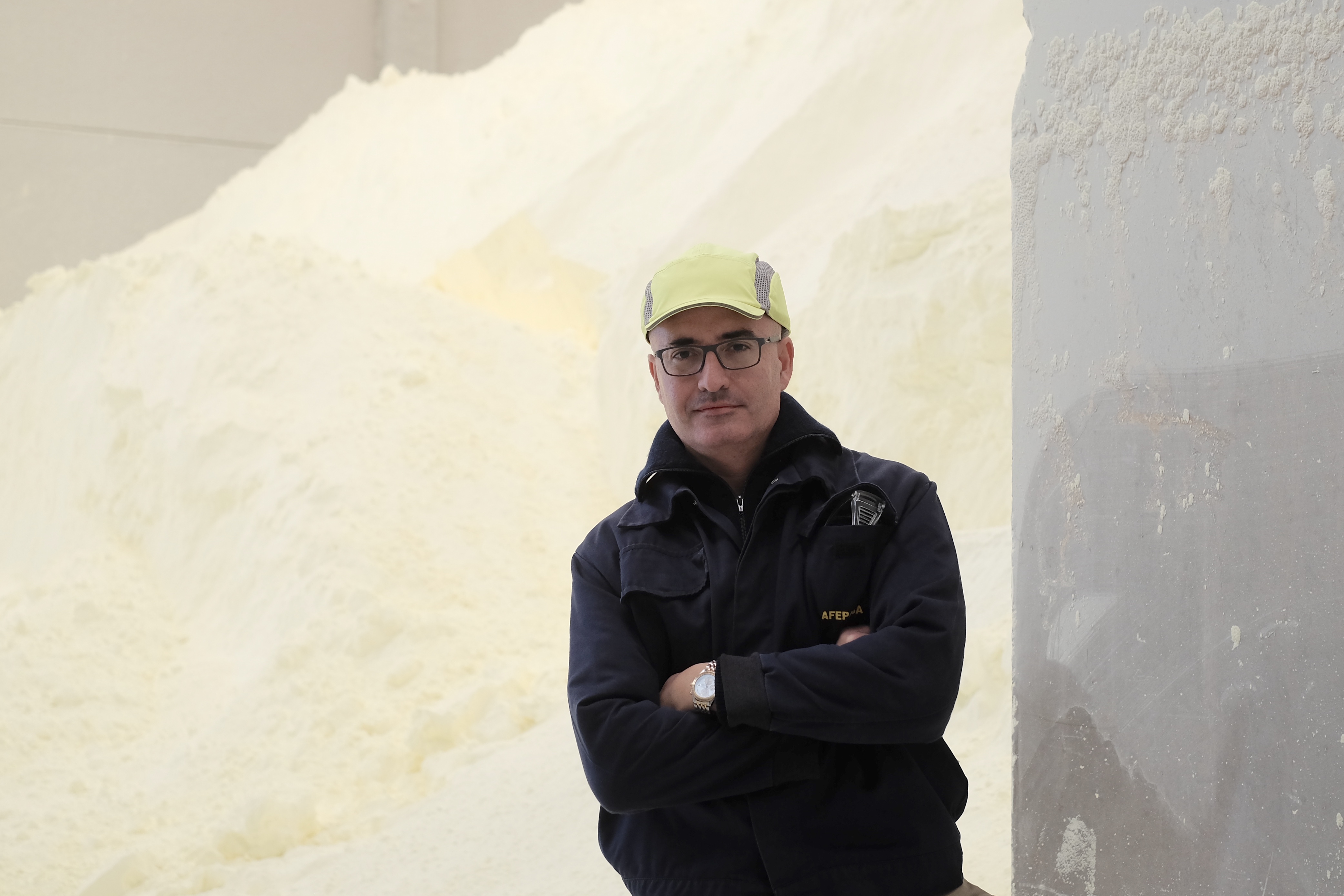
To explore the world of sulfur as an agricultural fertilizer, we interviewed Manel Montaño Salmerón, General Manager of AFEPASA, a company with more than 125 years of experience, focused on the production and distribution, in more than 80 countries, of crop protection products, fertilizers, and biostimulants based on elemental sulfur. AFEPASA currently operates the largest sulfur plant for agriculture in Europe and the second largest in the world. AFEPASA has been a member of AEFA since 2018.
Is sulfur one of the essential elements in agriculture?
It is known in many agricultural circles as the fourth element. In fact, the new European regulation will classify elemental sulfur as a macronutrient, bringing it in line with regulations in other continents, which are much more aware of its benefits and of crops’ sulfur requirements.
In fact, plants require the same percentage of phosphorus and sulfur, 0.3–0.5%; however, sulfur is considered a secondary nutrient (because until now there has been a significant reserve in the soil), whereas phosphorus is considered a primary nutrient due to its low availability.
It should be emphasized that sulfur is the best way to supply sulfates to the soil, since when it is transformed into an assimilable form, it also acts as a vehicle for other soil nutrients.
What are the characteristics of elemental sulfur?
The main characteristic of elemental sulfur is its insolubility in water, which, unlike sulfates, thiosulfates, etc., provides a long-lasting supply of sulfur to plants. In the latter cases, due to their high solubility, they are easily leached and remain available to crops for no more than six days.
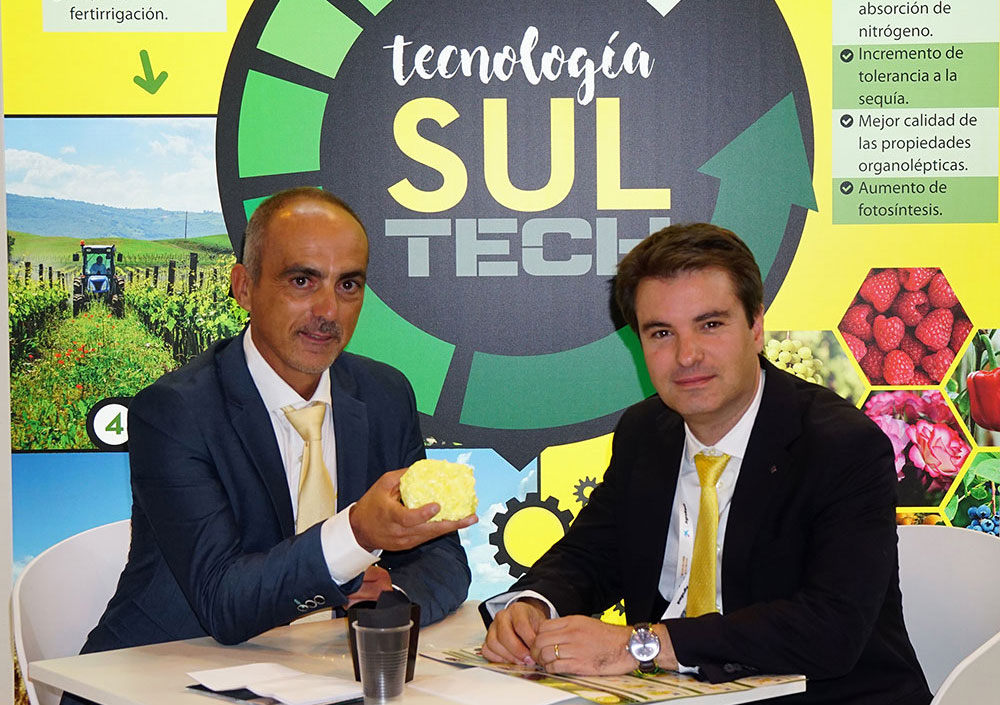
Sulfur is also a constituent of methionine and cysteine, two essential amino acids involved in numerous biological processes within the plant. These include the functionalization of certain proteins, enzymes, cofactors, etc., which are involved both at a structural level and in important biological processes such as photosynthesis or the generation of glycogen, which is particularly important in situations of plant stress. In our case, for example, we developed Sultech biostimulation technology, which has the ability to stimulate the plant and accelerate these bonds, as it consists of crystalline sulfur fractions.
On the other hand, due to the biotransformation that takes place in the soil through certain microorganisms—a process exclusive to elemental sulfur and not occurring with sulfates or thiosulfates—a series of biochemical equilibria is promoted that contributes to better nutrient absorption and the solubilization of immobilized nutrients. This occurs because the microorganisms’ exudates promote the growth of soil microbiota, creating a more active and optimal environment for plant growth.
It is also a soil conditioner. How does it work?
Exactly, as you point out, elemental sulfur is a soil regulator, contrary to what people have traditionally been told. Sulfur helps lower soil pH, but this is a very slow process and requires large doses. To lower pH effectively, different physical forms of sulfur are needed; it is not simply a matter of putting sulfur stones or granules into the soil, as these do not become incorporated into the soil and therefore do not act. In some of its formulations, Afepasa achieves pH reductions of between 0.5 and 0.7 points in less than a year, with sustainable results. In other words, if a certain dose is maintained annually, this reduction can be sustained.
When sulfates or acids are used, pH levels decrease, but this effect only lasts for a few days. This is one of the great advantages of sulfur, as it acts as a true soil conditioner. It should be noted that after an initial decrease in pH, sulfur causes the pH to stabilize and the curve changes from exponential to asymptotic, meaning that it never drops below 6. This is important because, when dealing with acidic soils, sulfates should not be used as they are lost very rapidly. Elemental sulfur, however, can be used because the chemical reaction with hydrogen does not take place, leaving more free sulfur available to oxidize while gradually providing the sulfate that the plant needs, thus helping to combat leaching.
Another important advantage, and one that is less well known, is its ability to balance or regulate soil electrical conductivity. Sulfur helps solubilize insoluble salts resulting from marine salinity, particularly in coastal areas, as you well know. On the other hand, when conductivity is low, sulfur oxidizes more rapidly, leaving free ions that help increase conductivity.
Thirdly, sulfur contributes to an increase in the microbial richness of the soil, the “microbiota”. Sulfur is the main food source for thiobacteria, which are present in almost all soils, and their exudates support the development of many other microorganisms, creating a chain reaction. A good example of this is the practice followed by more experienced farmers of mixing manure or organic matter with sulfur to help solubilize or, as it is commonly described, “loosen” the soil.
Should farmers distinguish between sulfur requirements as a nutrient and its use as a soil amendment?
Of course. Sulfur provides a slow and programmed release of sulfate ions, which are essential for plant nutrition. All plants require sulfate ions for their development, as they are responsible for taking up different micronutrients and making them available for assimilation. However, this is a gradual and long-lasting process because sulfur is insoluble in water. Although directly applied sulfates are effective during the early stages (approximately the first six days), after this period, sulfate is rapidly leached due to its water solubility, creating the need to apply larger quantities.
This is why during rainy periods, sulfur is the only effective option thanks to its insolubility.
How long has sulfur been used in plant nutrition?
Since ancient Mesopotamia, there have been written records of the use of sulfur both for crop protection and nutrition. Unfortunately, over recent decades, particularly here in Europe, some companies, out of fear of handling sulfur and in their pursuit of greater profits, have eliminated elemental sulfur from their formulations. Fortunately, this only occurs in Europe, and fortunately, Afepasa is also here in Europe, with more than 125 years of experience developing and defending the use of sulfur rather than sulfates.
There is another very important point: the Singh and Schwan theory (2011), which explained that for every kilogram of sulfur deficiency in the soil, a potential assimilation of 15 kg of nitrogen was lost. Therefore, sulfur can also help reduce costs associated with application rates.
Today, is sulfur still used in the same way, or has there been an evolution in its formulation and how it is presented to farmers?
Indeed. In the past, sulfur was obtained from deposits resulting from volcanic activity or from disturbed soils rich in sulfur. Over the centuries, soils have become depleted because we have extracted sulfur without replenishing it, leading to the critical situation we face today.
There are many formulations, and it is enough to look through the catalogs of the companies that make up AEFA. In our case, for example, we have products ranging from slow-release coatings for different NPK fertilizers, taking advantage of the insolubility of coarse sulfur. These products are ideal for application with fertilizer spreaders and are completely dust-free, but shortly after application they disintegrate and return to a powder-like state that is easily assimilated into the soil. As further examples, we also have formulations designed to be applied as a fast-acting sulfur amendment, as well as formulations with drastic activation through special additives, and even other liquid mixtures that help combat iron chlorosis, to mention one specific action on the plant.
An important anecdote for readers, which they should always keep in mind, is that sulfur always smells like sulfur. More importantly, and this is no joke, it is yellow and insoluble in water. I say this because there are companies that try to offer products supposedly containing sulfur that are not yellow, for example, or that are 100% soluble.
How can farmers find this product at agricultural supply stores?
It is available in numerous formats, including solid granules, complexes in 25 kg bags or big bags, liquid suspensions in containers, powder directly, polymeric forms, etc. The secret is to always maintain the chemical structure of sulfur and only modify its physical form, thereby preserving all its properties intact.
What dynamics or processes does sulfur undergo in the soil?
They are simply chemical and biochemical reactions that gradually transform sulfur into acid or sulfates.
What are the sources of sulfur?
Sulfur occurs naturally, as I mentioned earlier. A few decades ago, unfortunately, it was also present in the air, creating acid rain when gases from cars and factories reacted with water. Today, such acid rain no longer occurs, but no one is replenishing sulfur in the soil. Sulfur minerals are found in the soil combined with other minerals; there are no other ways of generating sulfur.
Can it be used in organic farming?
Of course. It is one of the oldest products known, not only as an organic fertilizer, but also as a biocide and pesticide. Sulfur is 100% organic and natural; it is not created or manufactured. For example, at our factory, we only transform its form and clean it, but the sulfur itself is exactly as it was extracted from the soil, mixed with other valuable minerals.
It is important to distinguish between organic and sustainable, and to be careful not to confuse or be confused by so-called “mine or mineral sulfurs.” This is simply a play on words used by “marketing people.” Sulfur is, of course, a mineral and always will be, and its origin is the soil. Whether it is extracted from coal mines, volcanoes, or oil wells is simply a matter of extraction method. There are no sulfur mines as such, since its raw price is very low and no one could make a living from it.
Sulfur is currently a by-product for much of the chemical industry, and it is simply a matter of taking it, cleaning it, adapting it, and returning it to where it belongs: the soil.
What other applications does sulfur have in agriculture?
There are many. The best-known applications of sulfur are crop protection, as a fungicide against powdery mildew or as an acaricide and repellent against red spider mites. It is also used as a fertilizer, as we have already discussed, as an encapsulating agent for slow-release formulations even in the absence of water, and as a biocide due to the registered biocidal action of S₂ gas, known as sulfites. Nevertheless, thanks to technological advances, new applications can be developed. In our case, we have started the revolution of sulfur as a biostimulant with our Sultech® technology, which consists of manipulating elemental sulfur in its three physical states to obtain nutritional and biostimulant formulations.
How can sulfur be applied to plants?
By spraying, fertigation, or irrigation, as with all of Afepasa’s liquid products; using a fertilizer spreader for both complex granules and sulfur granules; and by dusting. It is important to point out that sulfur applied as a blend is equally effective, although it is better when incorporated into a complex formulation. The properties of sulfur, when present in an assimilable formulation, allow it to be mixed, and its coverage range is greater than that of some other macronutrients.
Is it easy to detect sulfur deficiency in plants? What about excess sulfur?
Of course, but the problem is that it can only really be observed by comparison, for example, between a farmer who uses it and one who does not. Differences can be seen in the intensity of the green color of the leaves, plant size, or increases in vitamins, proteins, etc., depending on the crop, such as citrus fruits, cereals, and others.
When detecting sulfur deficiency, it can be confused with nitrogen deficiency, since the assimilation processes within the plant are similar.
As for excess sulfur, it is more difficult to reach excessive levels when applying elemental sulfur. Due to its sustained degradation over time, there is no sulfur peak on the day of application; instead, levels are maintained over time. Furthermore, even with an excess of elemental sulfur, bacteria reach a maximum capacity, meaning that even if large amounts of sulfur are applied, the sulfate—the form that is absorbed by the plant—will not be present in excess.
Related products
Biostimulants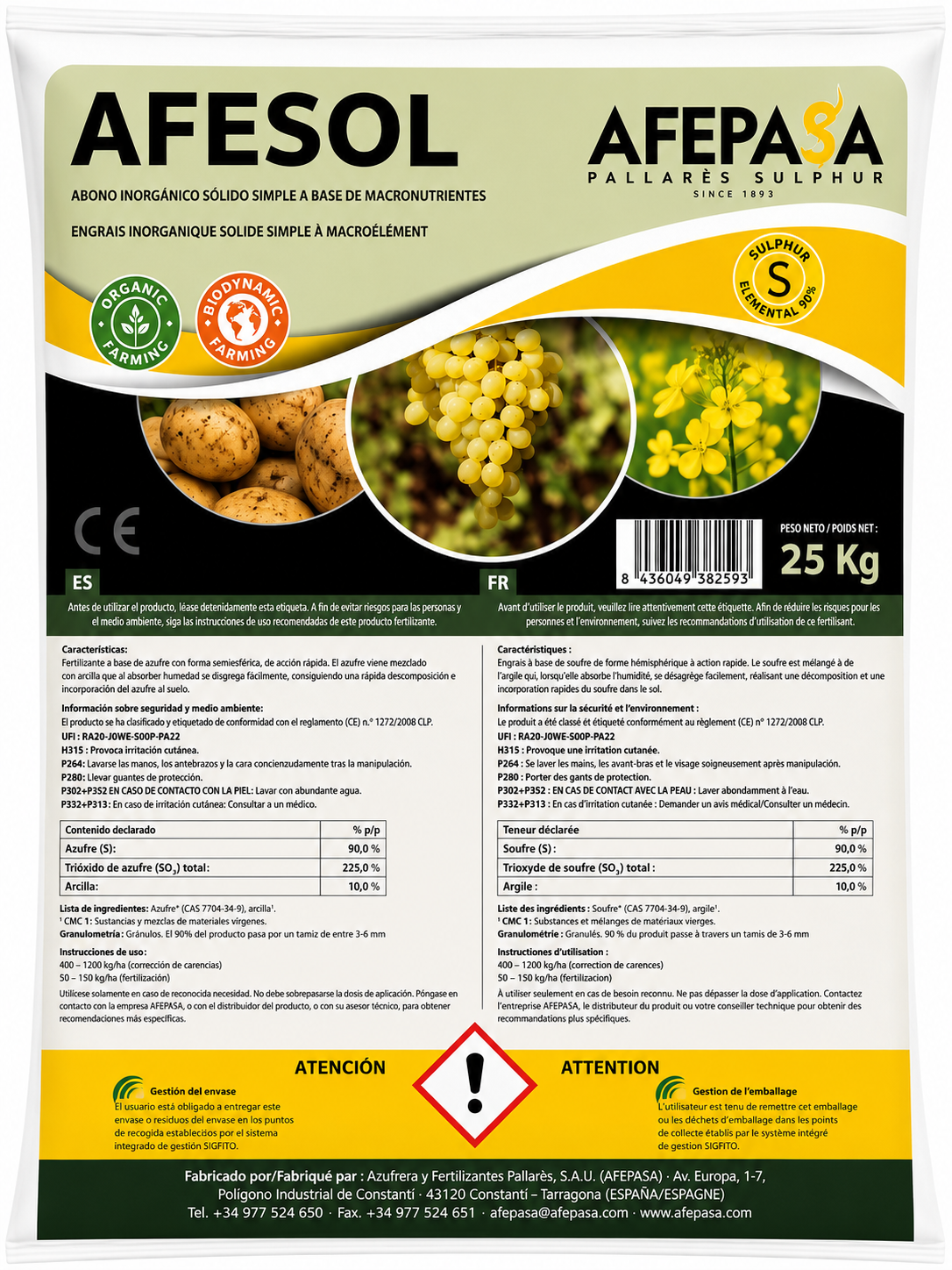 FERTILIZERS
AFESOL
Semi-spherical soil amendment with rapid action. The sulphur is blended with clay, which…
 FERTILIZERS
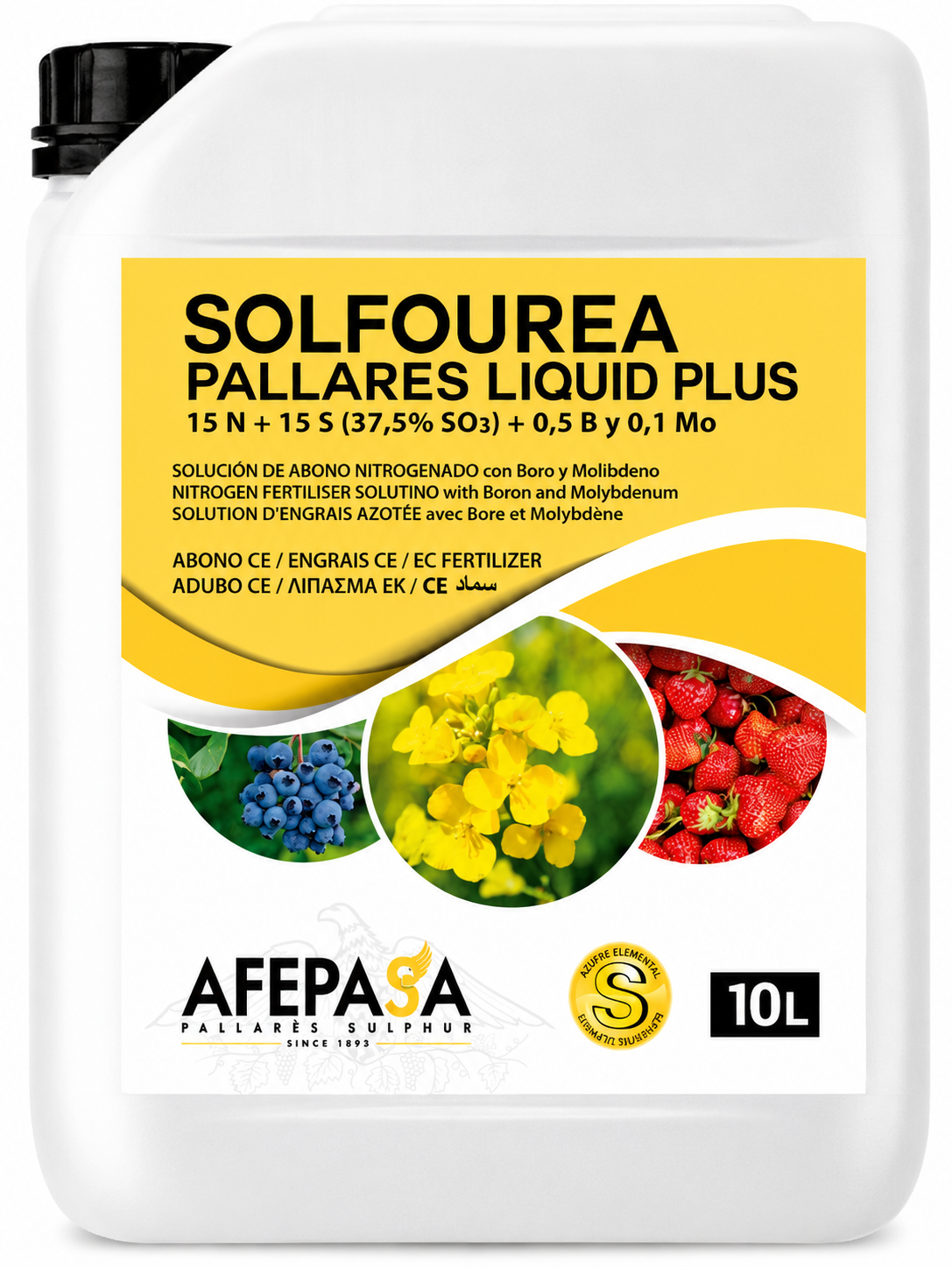
SOLFOUREA PALLARES LIQUID PLUS
Liquid nitrogen fertiliser enriched with sulphur, boron and molybdenum, designed to…
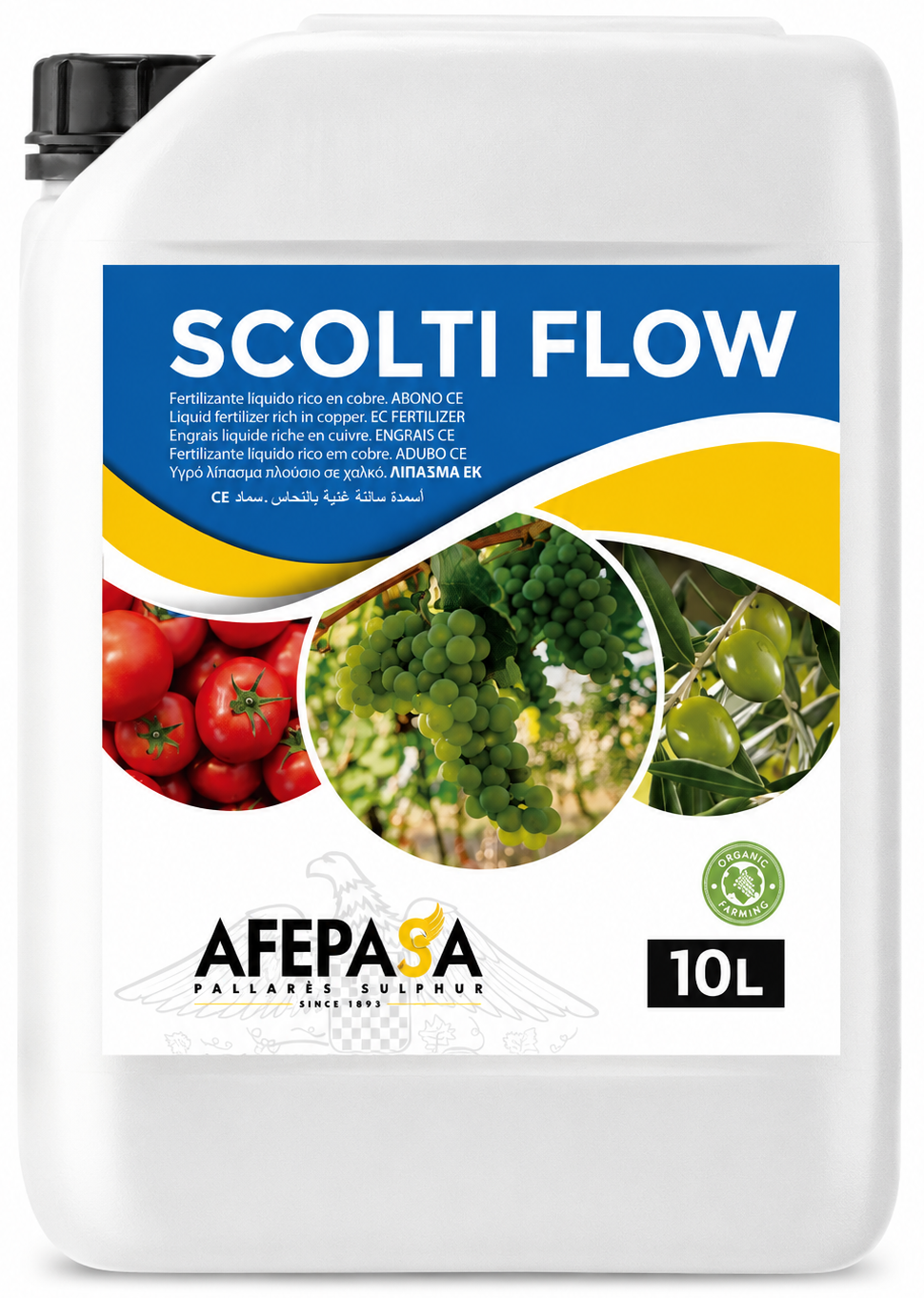 FERTILIZERS
SCOLTI FLOW
Copper and sulphur fertiliser formulated as a suspension concentrate (SC). Upflow…